Stories shaped
in clay & time.

Ceramics in Safi is a field with a long history: local clay, maritime trade, and a unique visual vocabulary. The Village des Potiers is where that field is still produced today.

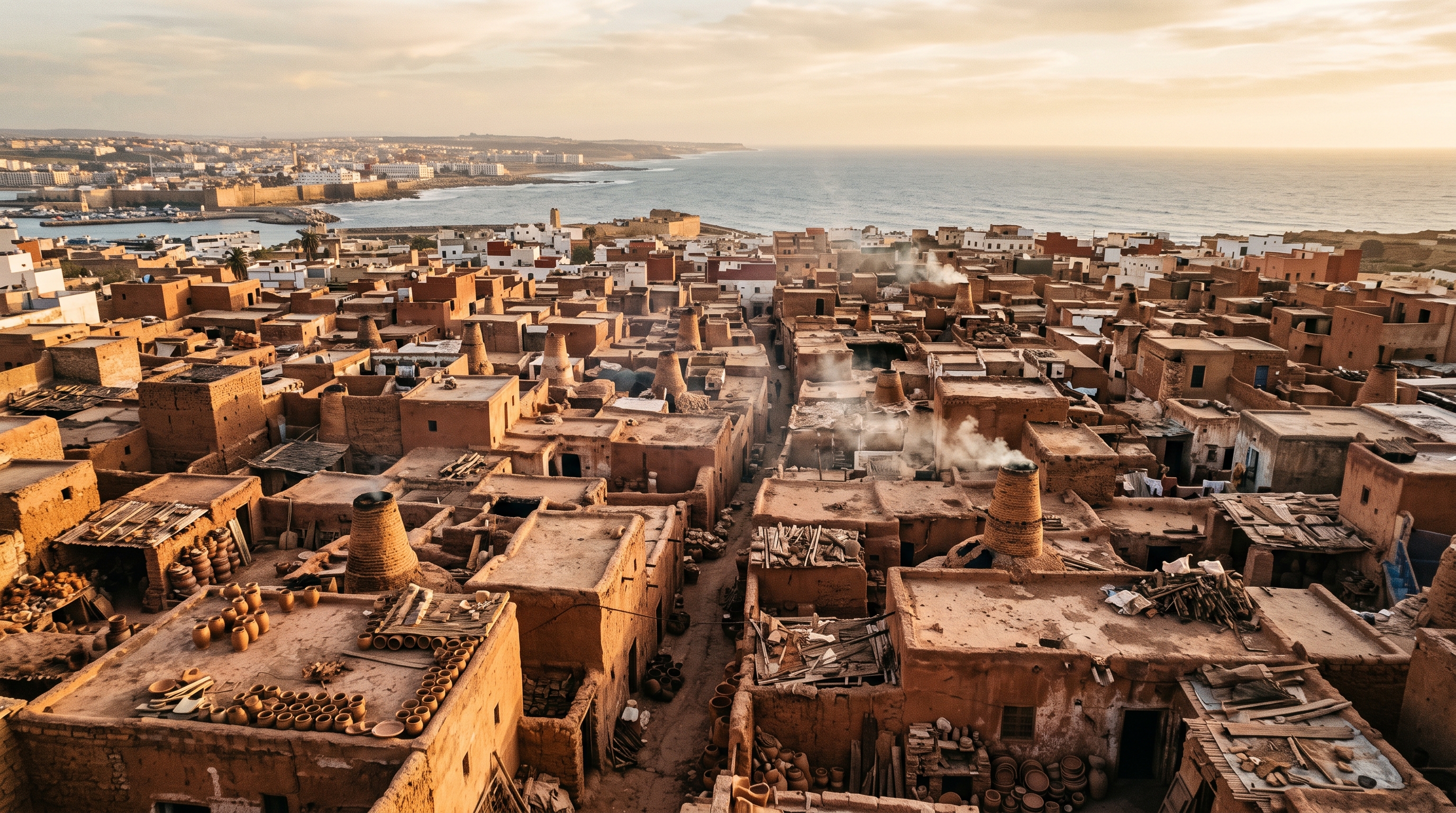
Rooftop view of the Village des Potiers with kilns and workshops

11th c.

Almoravid origins

1920

First ceramic school in Africa

450+

Lamali original creations

100+

Ateliers active today

Centuries of ceramic tradition.

Situated on Morocco's Atlantic coast, Safi's rich red clay deposits and strategic ocean routes created an ideal home for traditional pottery guilds.
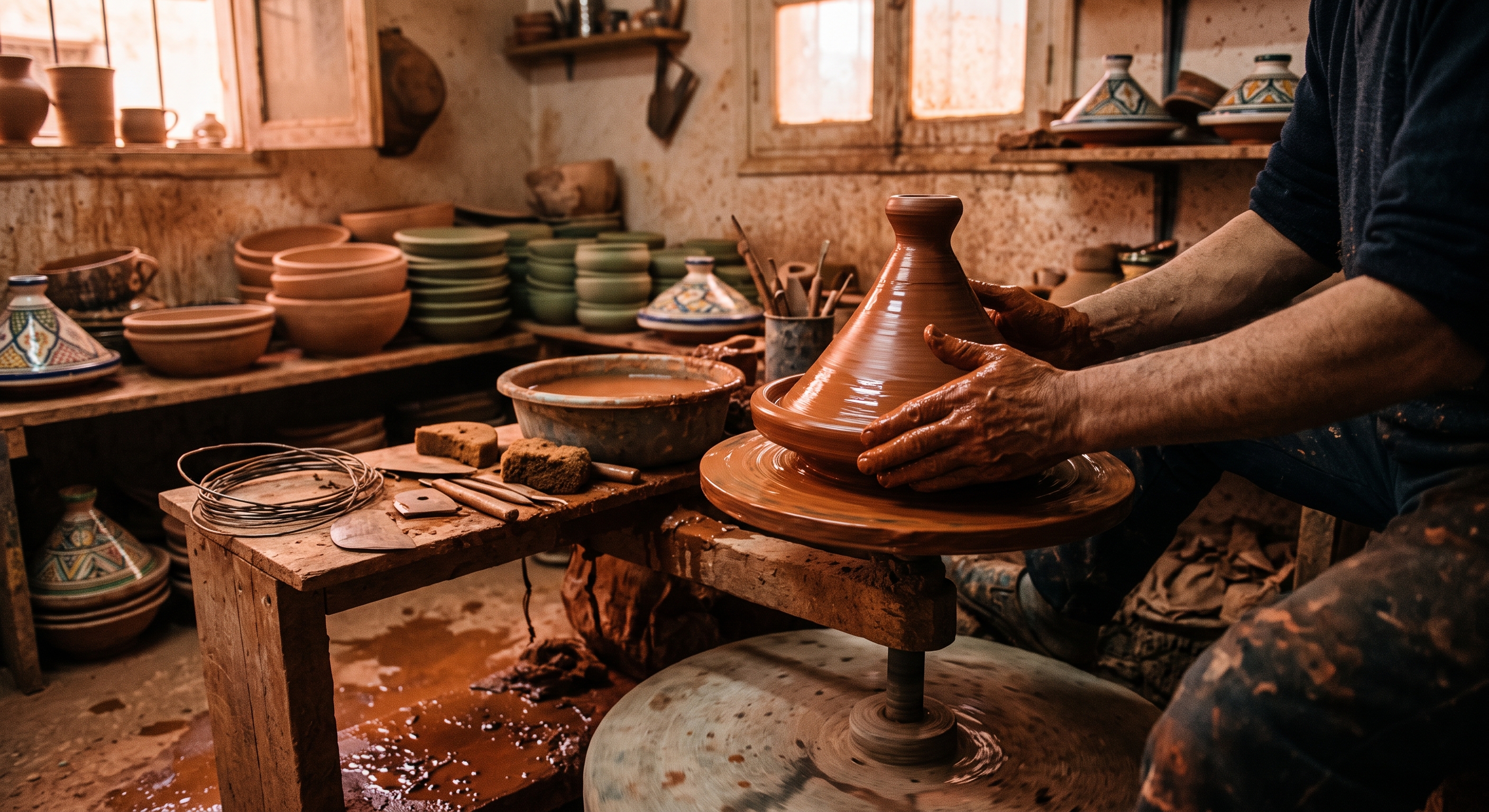
11th Century

Almoravid Era & Lalla Hniya Hamriya

Archaeological excavations at Lalla Hniya Hamriya in 1994 unearthed vast quantities of ceramic artifacts, proving active pottery manufacturing in Safi since the Almoravid era.

16th — 18th Century

Interruption & Maritime Revival

After a temporary halt during Portuguese occupation (1508–1541), production resumed in the 18th century, leveraging Safi's port to export utilitarian pottery across North Africa.

1875

Arrival of Maâlem Mohammed Langassi

Master potter Mohammed Langassi moved from Fez to Safi, establishing a new workshop that introduced fine polychrome faience and double-firing glaze techniques to local artisans.

1919 — 1920

Boujemaâ Lamali & The Pottery School

Maâlem Boujemaâ Lamali settled in Safi in 1919 and founded Africa's first formal ceramic school a year later. His workshop left over 450 original creations, establishing Safi as Morocco's national ceramic capital.

Today

A Living Craft Quarter

The Village des Potiers remains an active workplace of clay, paint, and fire — housing over 100 working ateliers supplying ceramics across Morocco and worldwide.
The language of Safi ceramics.

A recognizable aesthetic born from iron-rich local clay, mineral glazes, and visual poetry refined across generations.

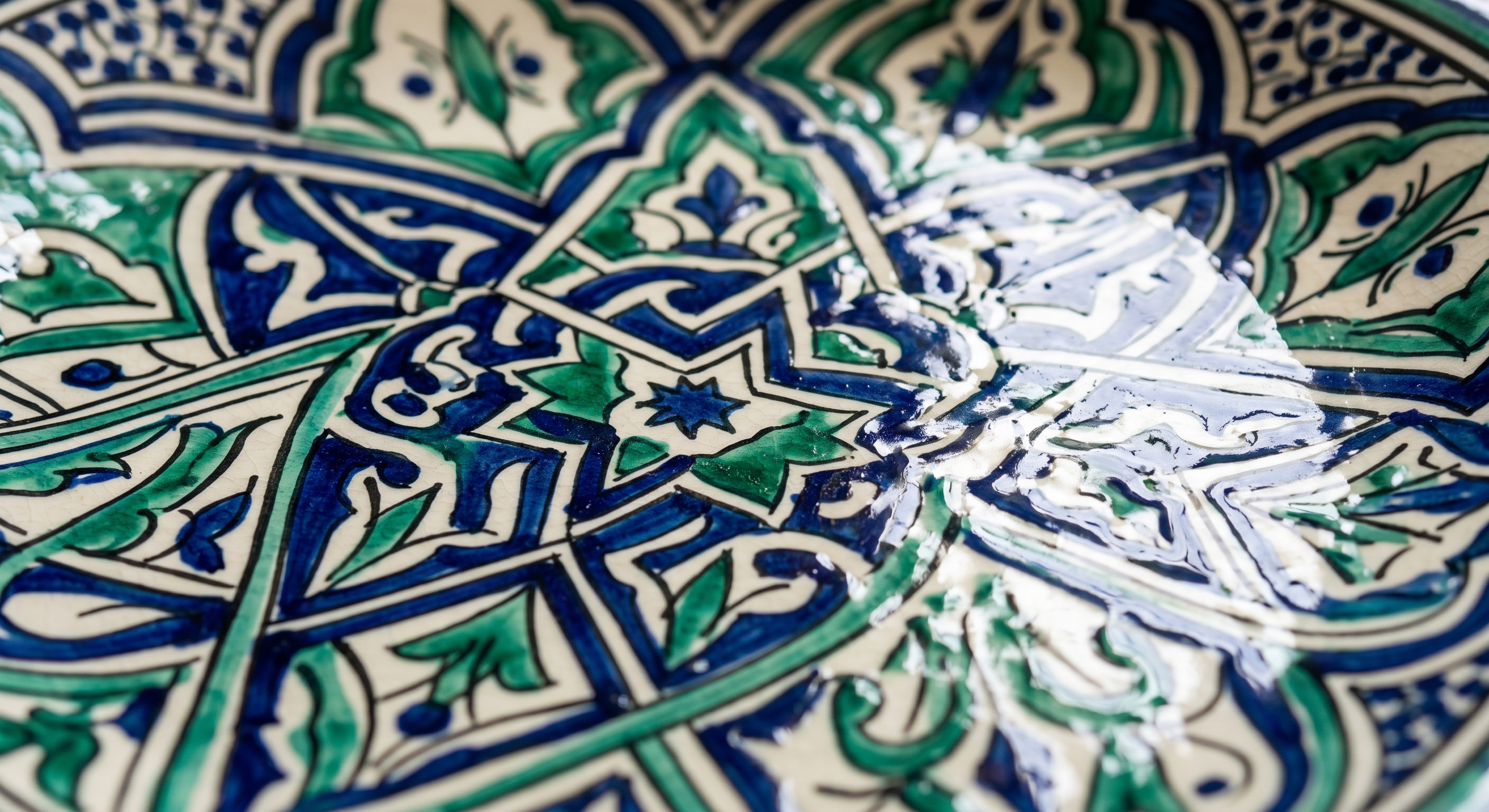
Close-up of Safi ceramic in cobalt blue and emerald green

Safi Blue & Green

Deep cobalt oxide blue and iconic emerald green ("Vert de Safi") applied freehand over smooth white kaolin slip.

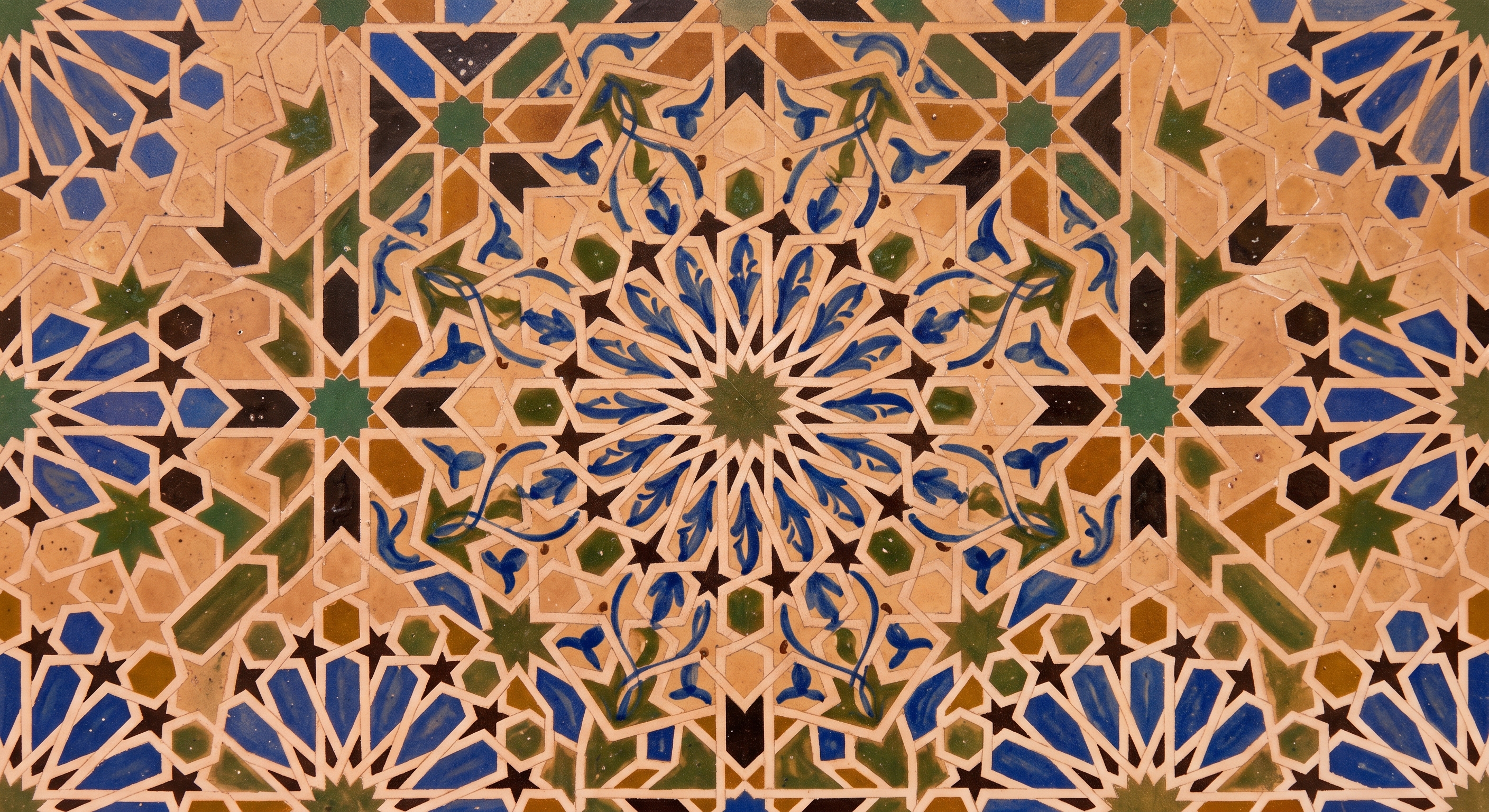
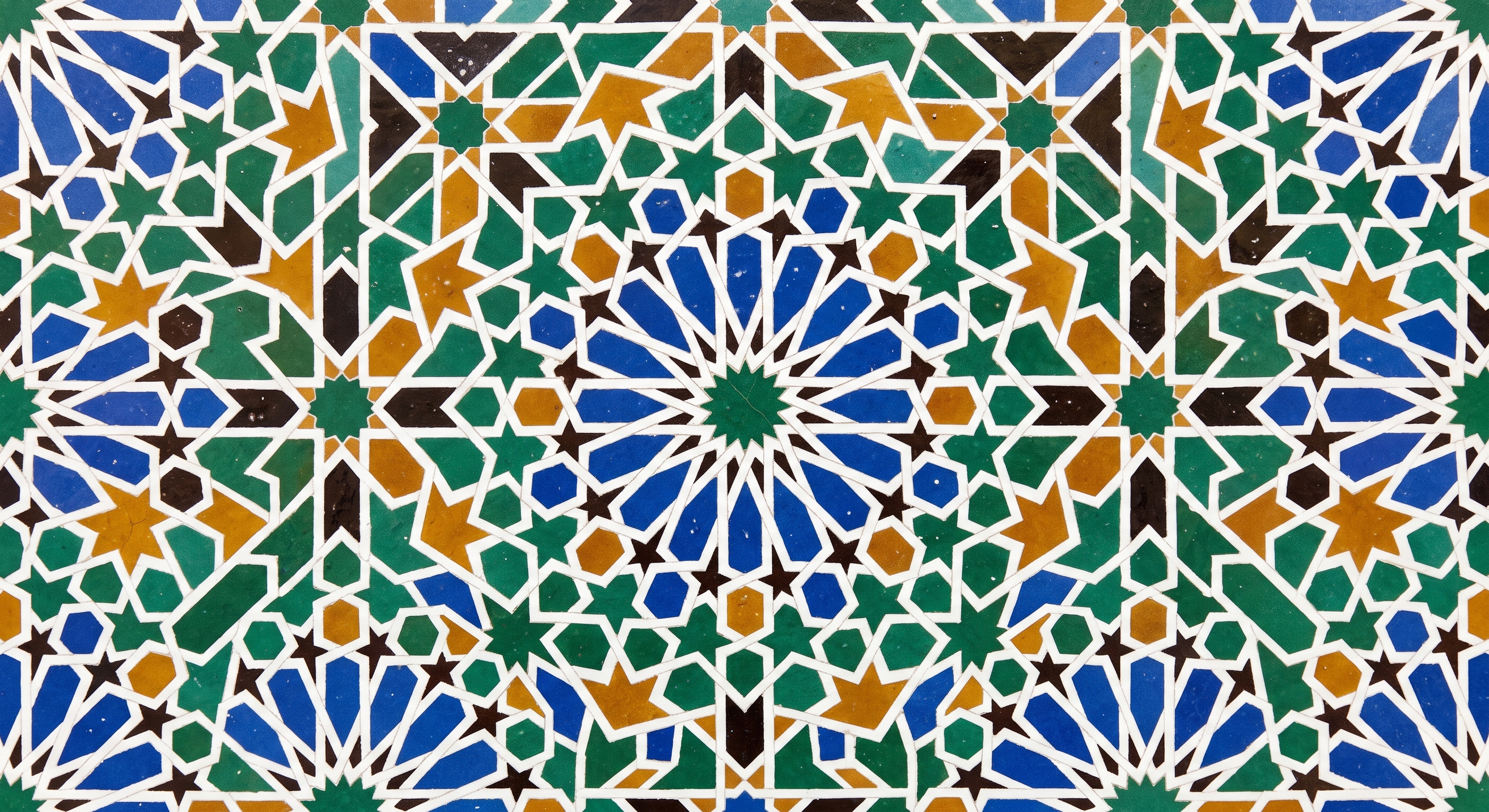
Interlaced star-polygon pattern painted on ceramic, echoing Zellij mosaics

Geometric Geometry

Interlaced star polygons and repeating line work directly echoing traditional Moroccan Zellij mosaic art.

Hand-painted floral arabesque motif on a Safi ceramic piece

Floral Motifs

Stylized arabesques, leaves, and palm scrolls painted with fine squirrel-hair brushes without templates.

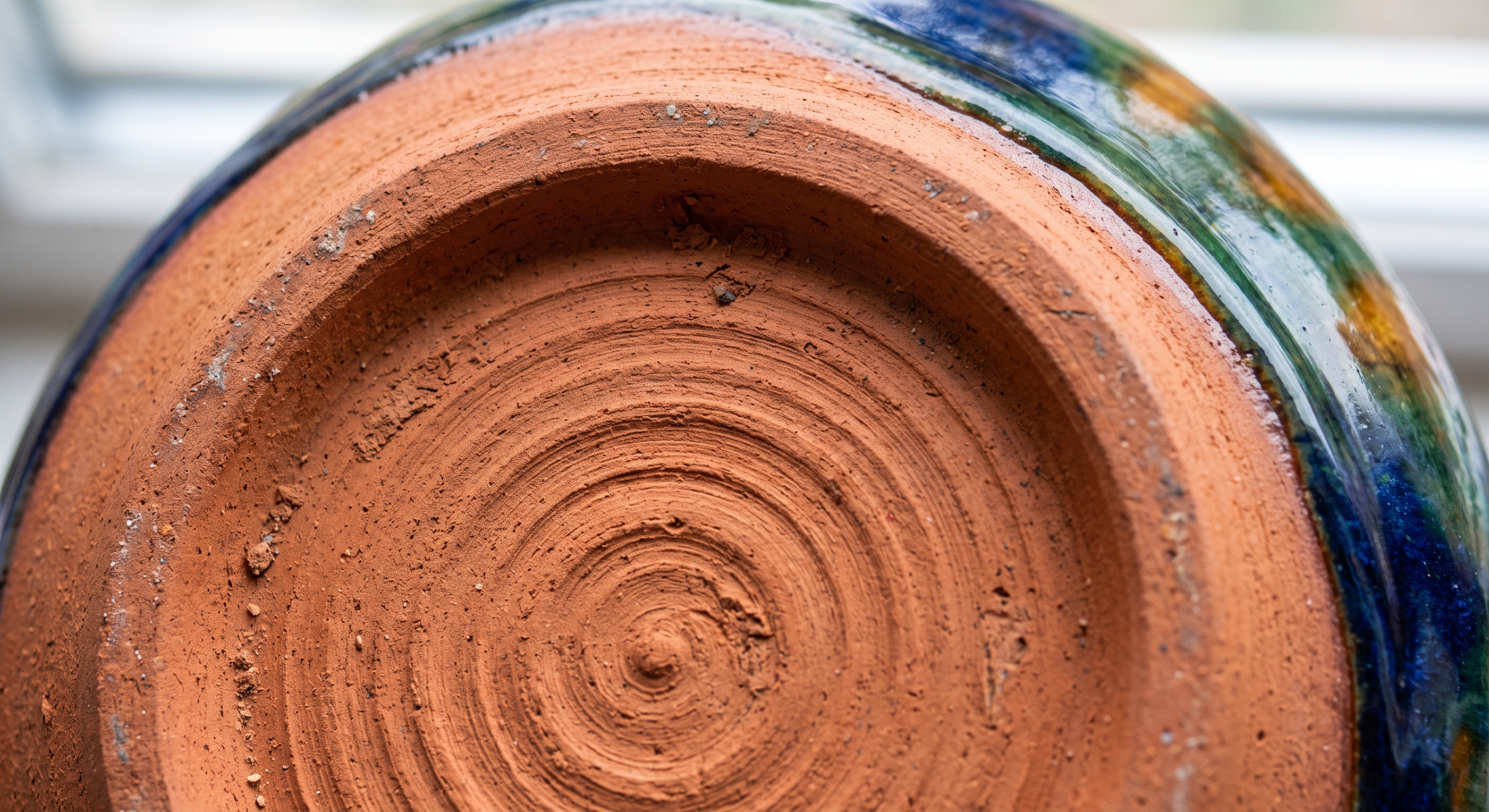
Unglazed terracotta base of a Safi ceramic vessel showing red clay

Terracotta Earth

The warm, iron-rich body of local red clay shows through unglazed bases, anchoring each vessel in Safi soil.

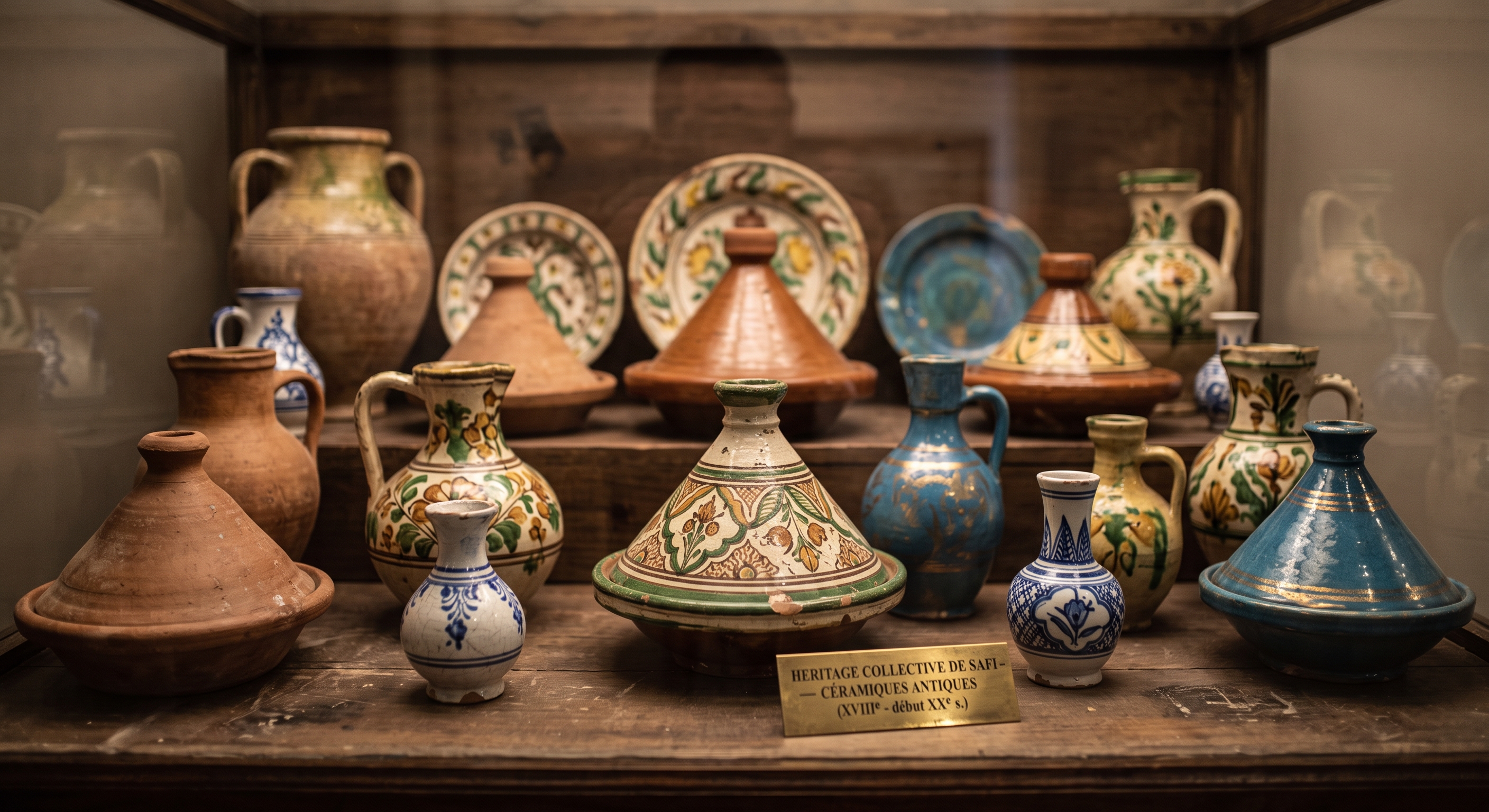
Antique Safi ceramic collection on display

More than pots.
Cultural memory.

Each piece carries the accumulated wisdom of generations — a tactile archive documenting Safi's identity and craftsmanship.

Safi pottery remains tied to daily Moroccan life — conical tagines for slow cooking, water jugs (*guerraf*) that cool water naturally, and large couscous platters set at family gatherings.