The Craft
The patient art
of
making
ceramics.
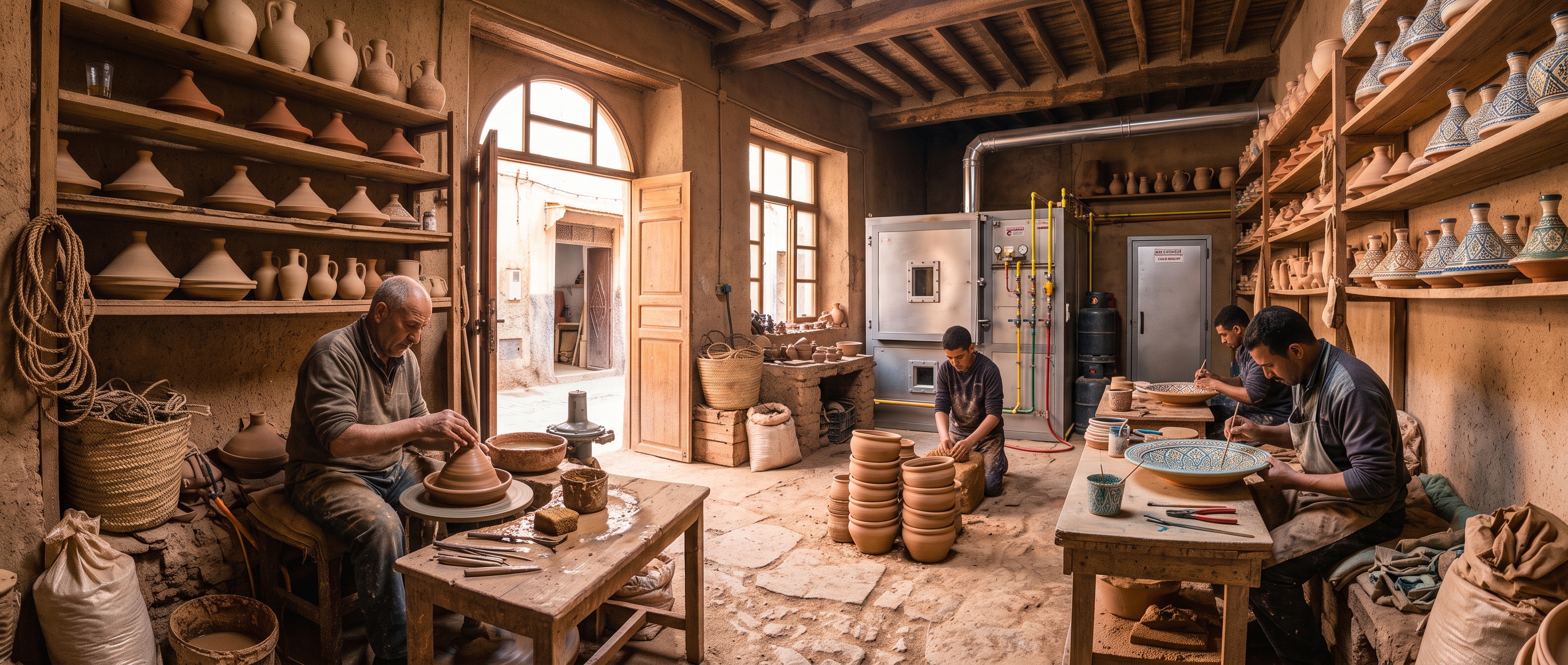
Every piece of Safi pottery is the result of slow, skilled work — gestures perfected over decades, materials chosen with care, and a rhythm governed by the drying of clay and the heat of the kiln.
The process
From earth to object.
Seven principal stages transform raw clay collected from the region into finished ceramic pieces.
Clay selection & preparation
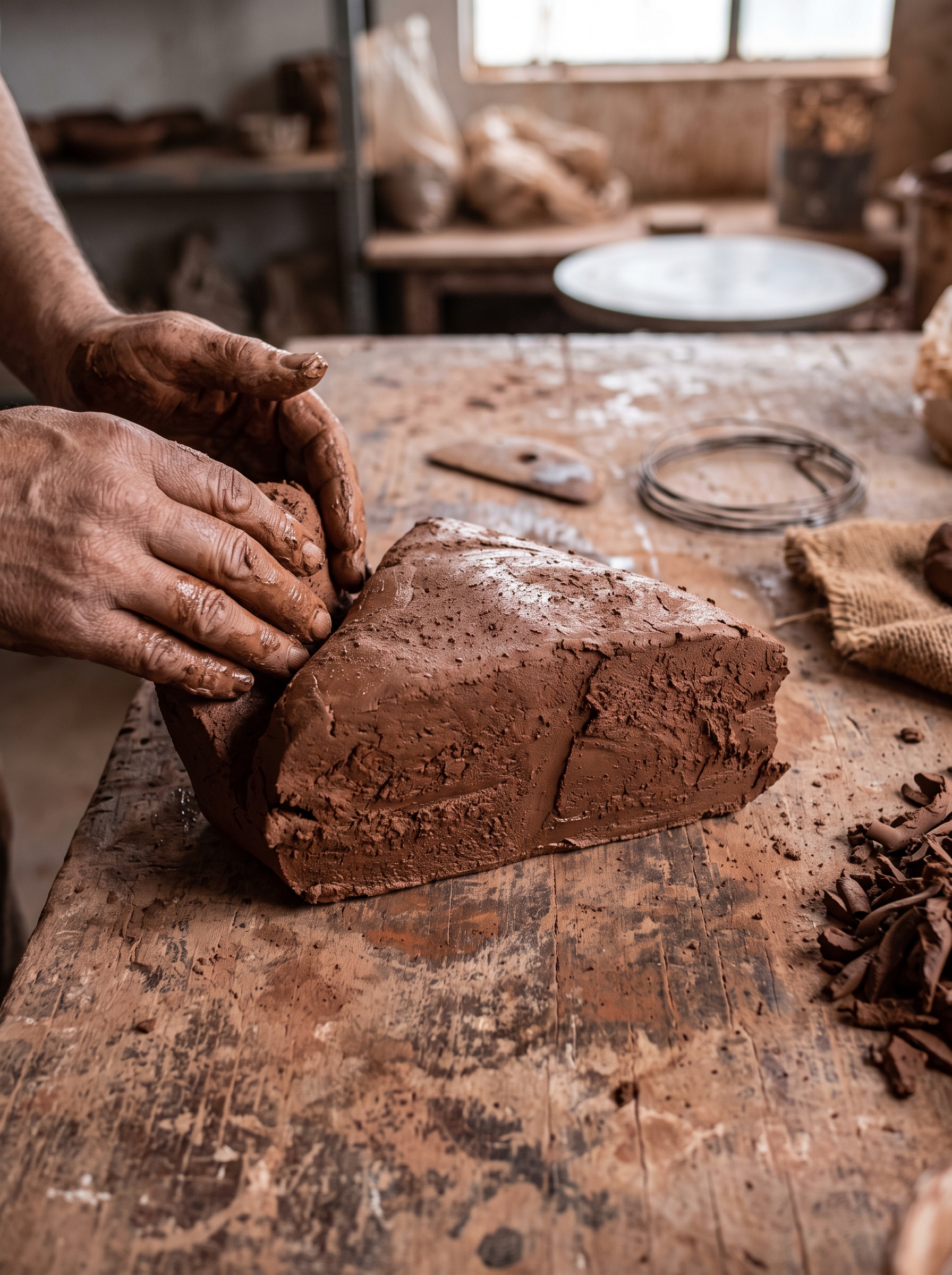
Clay is sourced locally from riverbeds and quarries near Safi. It is dried, crushed, sieved, and then mixed with water into a homogeneous, workable paste before being left to rest.
Shaping by hand & wheel
Artisans shape the clay either by hand using traditional coiling and pinching methods, or on a manual or electric wheel — a skill that takes years of apprenticeship to master.
Slow drying
Once shaped, pieces dry slowly in the open air, sheltered from sun and wind. This stage can take days and prevents cracking during the first firing.
First firing (bisque)
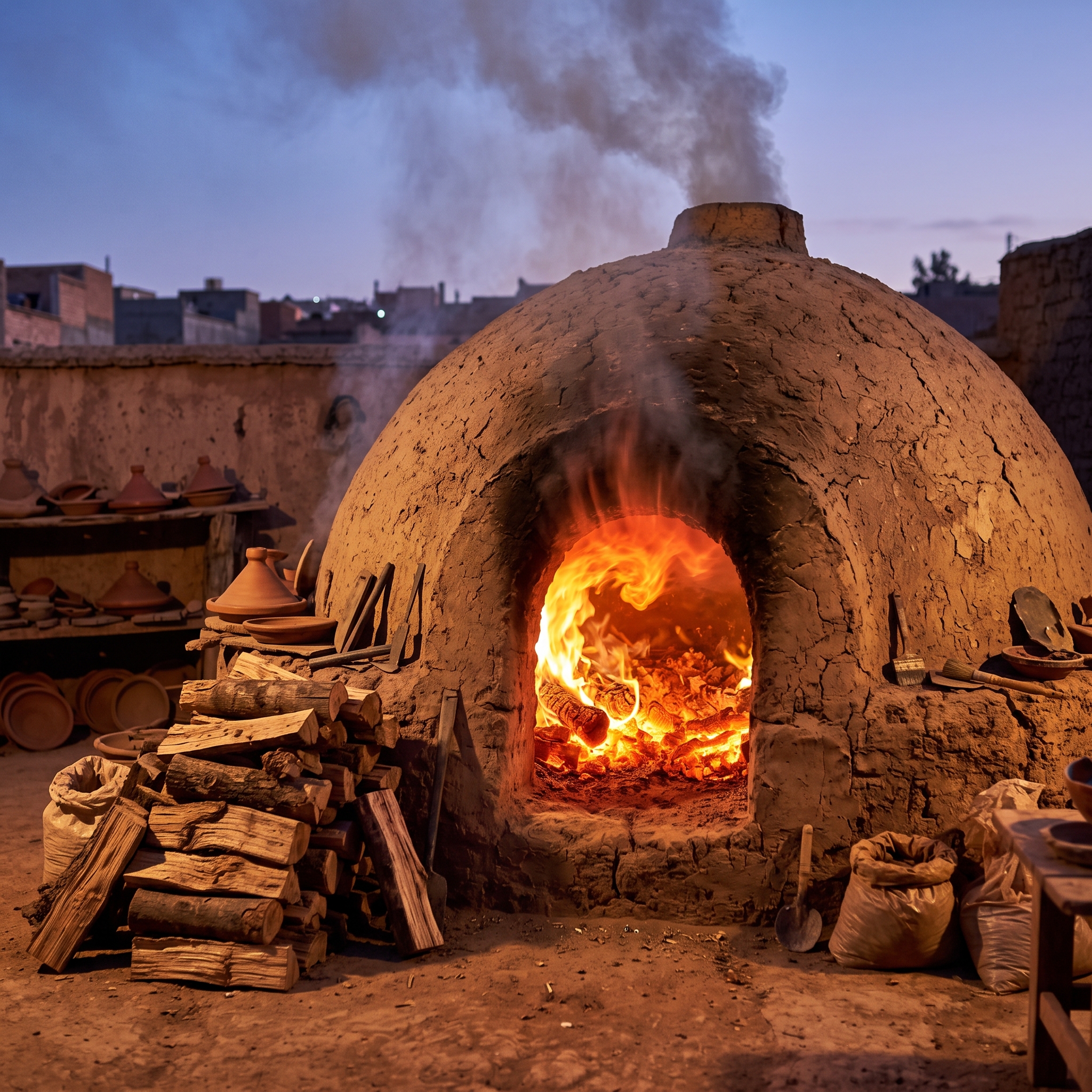
The greenware is placed in a traditional kiln for the first low-temperature firing, turning it into porous, durable bisque ready to receive decoration and glaze.
Slip & hand-decoration
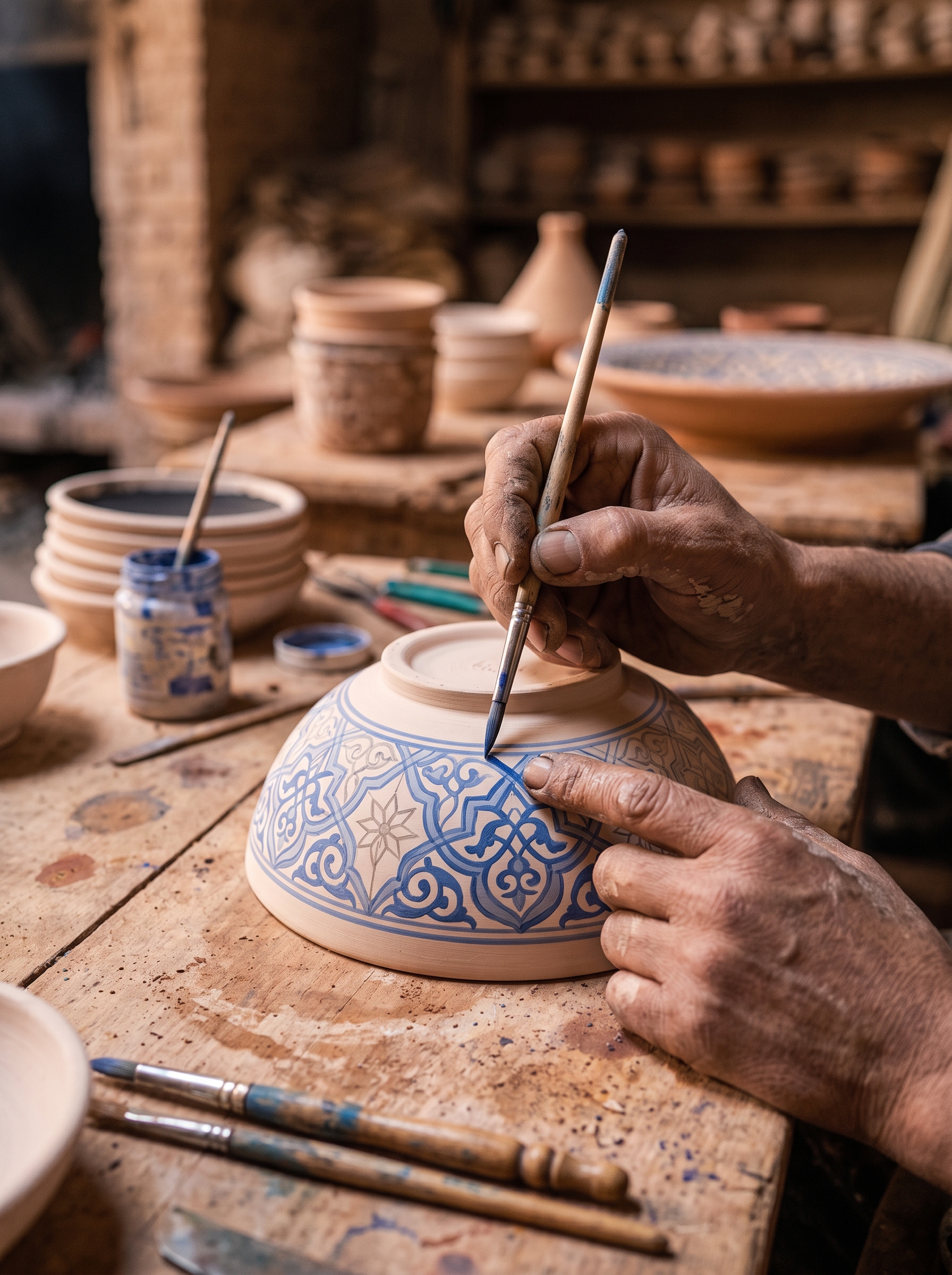
Artists apply a white or cream slip before painting motifs entirely by hand. Using fine brushes, they create the geometric lines, arabesques, and "Safi Blue" for which the city is known.
Glazing
A transparent or coloured glaze is applied by dipping or brushing. When fired, the glaze vitrifies into a glassy, waterproof surface and intensifies the colours beneath.
Second firing & finishing
The glazed pieces return to the kiln at much higher temperatures. After cooling, they are inspected, lightly finished, and readied to leave the workshop.
Materials
Rooted in the
local land.
Rich Safi Clay
Iron-rich terracotta clay from the surrounding plains and coastal riverbeds gives Safi pottery its characteristic warm, earthen body.
Cobalt & Mineral Pigments
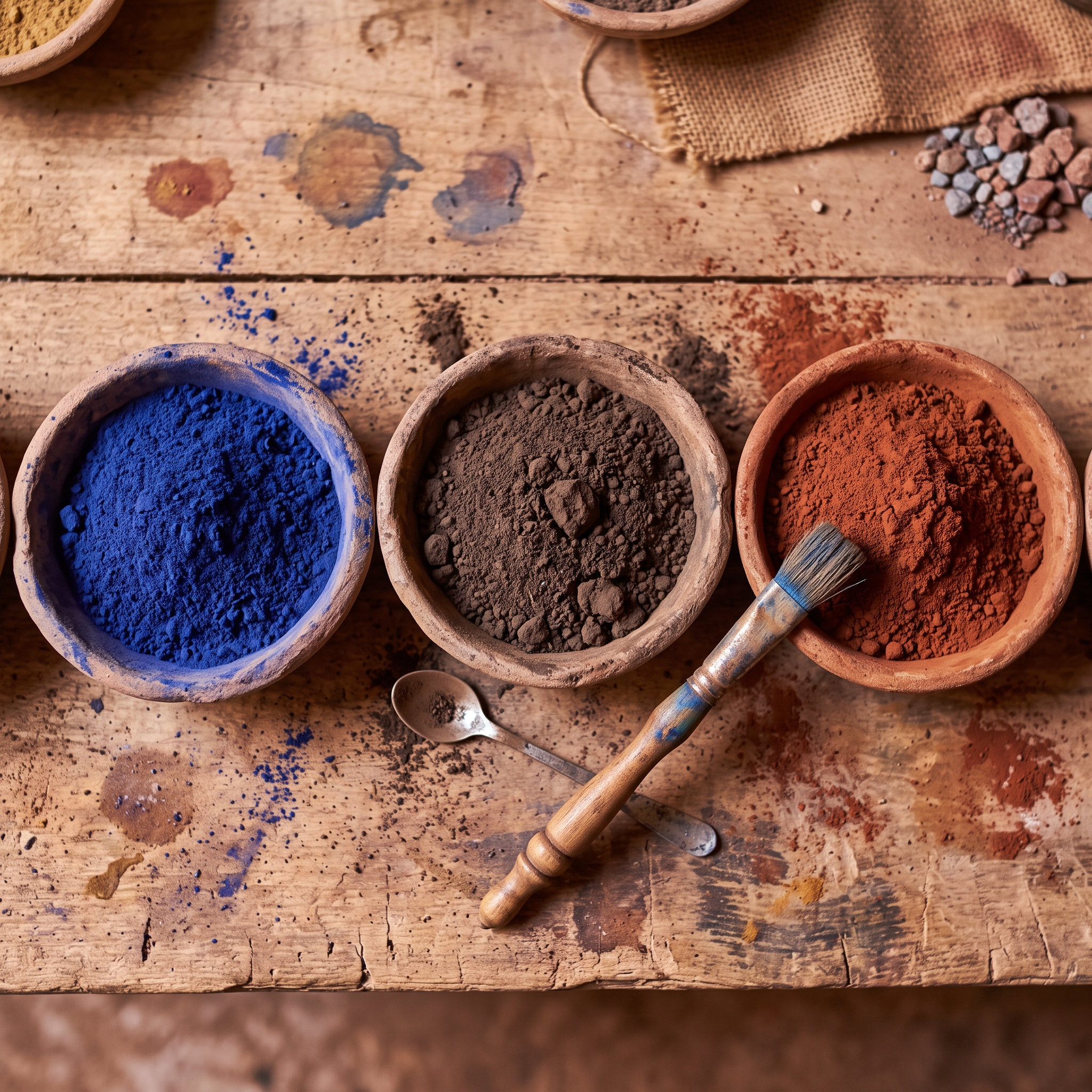
Cobalt oxide for the signature Safi Blue, manganese for deep browns, iron oxides for ochre — historically sourced locally, now carefully selected mineral pigments.
Glazes, Old & New
Traditional lead-based glazes are still used for many decorative pieces. A growing number of workshops now also produce food-safe, lead-free ("sans plomb") lines, mainly for tableware and export.
Patience & knowledge
"We do not rush the clay —
the clay teaches us
its own time."
— A Safi potter's saying